Taking Over a Newbuilding Aframax Tanker

Taking Over a Newbuilding Aframax Tanker
Universal Shipyard-Japan

Thursday, 23 June 2011

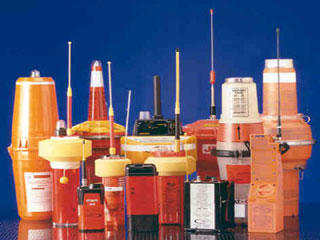
Emergency Position Indicating Radio Beacon (EPIRB)

Quantity Required: 1 pcs
Battery Life: 48 Hrs
Operating Temperature: -40ºC to +55ºC

An Emergency Position Indicating Radio Beacon (EPIRB) is used to alert search and rescue services in the event of an emergency. It does this by transmitting a coded message on the 406 MHZ distress frequency. This message is relayed via satellite and earth station to the nearest rescue co-ordination center.

EPIRB works with the Cospas-Sarsat polar orbiting satellite system, which provides true global coverage. The system has an alert delay of typically 45 minutes dependant to when the satellites come into view on the horizon. The satellite can determine the position of the EPIRB within 5 km (3 miles) and the coded message identifies the exact vessel to which the EPIRB is registered. This information allows the rescue services to eliminate false alerts and lunch an appropriate rescue.

The EPIRB has a secondary distress transmitter. This transmits on 121.5 MHZ and used for “homing” purposes. When the rescue services get close, this allows them to direction to find on the signal. To cater for searches at night, the EPIRB has a bright flashing light that aids final visual location.


Operational procedure


There are two way for activation of the EPIRB, one is manually and one is automatic thru HRU.

If the vessel is sinking and there is time to fetch the EPIRB then this should always be done. Remove the EPIRB from the mounting bracket. Once the liferaft is in the water, uncoil the lanyard and tie it to the liferaft, then throw the EPIRB overboard so that it floats next to the liferaft. The EPIRB will operate because its sea switch will activate, or you can manually activate it by sliding the door to the left and then momentarily pressing the ON button. (The on button is hidden behind a sliding door, which protects it from accidental activation. The sliding door has a temper seal to show if the EPIRD has been activated before.)


If there is not time to fetch the EPIRB. The EPIRB is supplied in a plastic enclosure. This is more than just a protective housing, it contains a sprung loaded lever, which automatically pushes the enclosure lid off and releases the EPIRB if your vessel sinks. A device called a Hydrostatic Release Unit (HRU) controls this automatic ejection. As the vessel sink, the enclosure fills with water. The HRU contains a blade, which is released due to water pressure acting on a diaphragm. Before it reaches a depth of 4 meters (13 feet), the HRU will operate and cut the plastic rod, releasing the spring coil. The spring pushes the EPIRB and enclosure lid outward. As the lid pivots off it disengages from the screw head that helped hold it in place.

The lid weighted so it rolls over and falls away. As the EPIRB floats away from the lid, it moves out of range of the magnet. Once away from the magnet its sea switch becomes armed. The EPIRB then floats on the surface with its strobe light flashing. 

When activated the EPIRB will start flashing immediately. It will make any distress transmissions for the first 50 seconds. This gives you a chance to turn it off, if you activated it accidentally. During the first 50 seconds the red lamp comes on continuously. When the red lamp starts to flash, the 50 seconds is over and distress transmissions have started.

To ensure the sea switch operates properly in rough seas, if has a built-in time delay. It has to be wet for at least 2 seconds before it will activate and it has to be dry for at least 8 seconds before it will de-activate.


Tuesday, 14 June 2011

New Amendments to SOLAS V/19; "BNWAS"

IMO resolution MSC.282(86) amended SOLAS Chapter V by adding two new requirements; "BNWAS" & "ECDIS". The dead line depend upon ship type, gross tonnage and keel laying. In this article, I will be dealing with Bridge Navigational Watch Alarm System (BNWAS).

The purpose of BNWAS is to monitor bridge activity and detect operator disability which can lead to marine accidents. The system alert the Master or another qualified Navigation Officer automatically if for eny reason the Officer on Watch (OOW) becomes incapable to perform his duties. This is achieved by a device with a serie of alarms, movement sensor and indications which are activated to alert in first instance (Pre-Warning) the OOW and, if he/she is not responding, then to alert (Alarm) the Master or another qualified OOW.

Applications Dates:

The system shall comply with following requirements:
 1.- Operational Modes:
  • Automtic (Brought into operation whenever the ship is heading or track control system is activated)
  • Manual ON (In operation constantly)
  • Manual Off (Does not Operate under any circusntances)
  • The system shall be provided with safety means to ensure access to control are limit to the Master (Key; Password; ETC)
2.- Sequence of indications and Alarms
  • The system should remain counting for a period between 3 to 12 min, prior any indication.
  • At the end of the settle period, pre-warning indication (visible only) at the bridge.
  • If not reset, after 15 sec (First Stage) alarm shal be activated only in the bridge.
  • If not reset, after another 15 sec (Second Stage) a remote audible alarm in the back up officer's and/or Master location shall be activated.
  • If not reset, after 90 sec counted from the second 15 sec (third Stage) a remote audible alarm  at the locations of further crew's members shall be activated.
  • In vessel other than passengers, the second or third stage alarm sound all at same time, the third stage alarm may be omitted.
3.- Reset Funtions
  • Should not be possible to reset or cancel any alarm from any other place than the bridge.
  • Should , by a single operator action, cancel the visual and all audible alarms and initiate a new dormant period. If rest is activated before the period is over new dormant period shall initiate.
  • To initiate a reset funtion an imput by a single operator (OOW) action is required, it may be generated by a reset device or movement sensors distribiute on bridge.
  • Continious activation of reset funtion should not prolong the dormant period.
4.- Emergency Call.
  • May be provided to activate second and third stage alarms in case assistance is need on the bridge.
5.- Power Supply:
  • From Main and Emegency, with automatic change over.
  • Power Failure alarm shall be provided
  • Power Failure of any navigational equipment shall not affect to any other piece of navigational equipment.
  • Vessel with IBS notation additional power suply shall be provided (UPS)

Saturday, 4 June 2011

IMO, Improving the Safety in Bulk Carriers.

To answer this question we have to go back to 1990s, when following a series of losses of Bulk Carriers happened. A study was carried out by IACS at the request of IMO, the study revealed that if a Bulk Carrier is flooded in the forward hold, the transverse bulkhead between the two foremost cargo hold may not withstand the pressure that result from the cargo and the water and the transverse bulkhead may collapse causing progressive flooding of the cargo holds and the vessel will sink in minutes, which does not give time to crew to abandon the ship.


In 1997, IMO adopted new SOLAS Regulation containing specific safety requirements to improve the safety of Bulk Carriers, Chapter XII – Additional Safety Measures for Bulk Carriers, entering in to force on 01 July 1999.

At the very first stage the new Chapter XII stated that:

• New Bulk Carriers of 150 m or more in length (built after 01/07/1999) carrying cargoes of 1000 Kg/m3 and above should have sufficient strength to withstand flooding of any one cargo hold.
• Existing Ships of 150 m or more in length (Built before 01/07/1999) carrying cargoes of 1780 Kg/m3 and above, the transverse watertight bulkhead between the two foremost cargo holds and the double bottom of the most foremost cargo hols should have sufficient strength to withstand flooding.

Under this new chapter XII, new criteria for damage stability and structural strengthening was introduced (URS 12, 17, 18, 20, 21, 25, 27…..), allowing surveyors to take into account restrictions on the cargo carried in considering the need for, and extend of strengthening of the transverse watertight bulkhead and double bottom. These restrictions can come, on the distribution of the total cargo weight between cargo holds and restrictions on the maximum deadweight. When such restrictions are imposed, them the ship shall be marked with a solid equilateral triangle, having sides of 500 mm and 300 mm bellow deck line, permanently in P&S sides at amidships.

Also loading instrument become mandatory, new Enhanced Survey Program was established to detect possible structural weakness and cargo handling practices were improved.

In December 2002 new amendments to chapter XII were done and included chapter XII/12, the installation of high level alarms to detect water ingress and new chapter XII/13 added with regard availability of pumping systems to drains any space forward collision bulkhead, among other strengthening of vent fittings and small hatches on forward decks.

In December 2004, when IMO at the 79th session of the Maritime Safety Committee adopted resolution MSC. 179(79)“Adoption of Amendments to SOLAS, 1974”. The existing chapter XII (1997) “Additional Safety Measures for Bulk Carriers” was reviewed and more specifically Regulation 8 amended and new Regulation 14 added.

The booklet required under Reg. 8 (SOLAS VI - 7.2) shall be endorsed by the administration or on its behalf, to indicate SOLAS XII regulation 4, 5, 6 and 7, as appropriate, are complied with. The booklet to be prepared by Ship’s Crew based in the info available on board from Stability Data, Ballasting and Deballasting Rates and capacities, Maximum Allowable load per unit of surface area of the tank top plating, Maximum allowable load per hold, Loading & Unloading instructions, any restriction imposed on the most adverse operating condition and Maximum permissible Shear Forces and Bending Moments and submitted for revision and approval, as above stated.

Any restriction as consequences of what is stated under Reg. 6 & 14 shall be recorded in the booklet and be permanently marked at amidships section with a Solid Triangle as well as. The ship trim and stability (loading) manual is to be endorsed with the restriction, in accordance reg.14 “The ship shall not sail with any hold loaded to less 10% of the hold maximum allowable cargo weight”

Therefore Reg. 14 apply only to BC of 150 m and more in length, single hold skin, carrying cargoes of more than 1,780 kg/m3 in alternate loading condition, were contracted for construction before 01 July 1998 or constructed before 01 July 1999 and when they reach 10 years and they are normally assigned with ESP notation.

The Amended SOLAS Chapter XII, finish in 14 regulations which are:
1. Definitions
2. Application
3. Implementation
4. Damage Stability requirements applicable to Bulk Carriers
5. Structural Strength of Bulk carriers
6. Structural and other requirements for bulk carriers
7. Survey and maintenance of bulk carriers
8. Information on Compliance with requirements for bulk carriers
9. Requirements for bulk carriers not being capable of complying with regulation 4.3 due to the design configuration of their cargo holds.
10. Solid Bulk cargo density declaration
11. Loading Instrument
12. Hold, ballast and dry space water ingress alarms
13. Availability of pumping system
14. Restrictions to sail with any hold empty

Sunday, 22 May 2011

Keyless Propeller Underwater Repair

During Vessel’s hull cleaning, damage in one propeller’s blade (A) was detected and identified as a crack of 60 cm length and located between 0.8 R and 0.7 R. As a temporary measure crack arresting hold were drilled to avoid crack growth while repairs were done.


The defect was stated to have been caused by material fatigue after straightening the four blades after grounding, may be caused as a result of non proper pre-hating for straightening or post heating for stress relief.


The propeller was identified as a Ni-Al-Bronze (Alloy Grade Cu 3), keyless, four (4) blade, 5800 mm Diameter and 14804 Kg.

Severity zones in a Propeller’s Blade are identified as A, B & C, where zone A is the area in the pressure side that goes from the roots to 0.4R, zone B goes up to 0.7R on both side and exclude zone A in pressure side and zone C includes the areas out side 0.7R on both sides. Welding repairs in zone “A“ are not permitted and in zone B and C till certain extend.

In view of the delivery time involved for a new propeller, a temporary repair was achieved which consisted of the following steps:

• Removal of crack, by cutting and shipping off.
• Clean/Polish and visual inspection for other damages.
• Cutting to be minimized.
• Straightening if necessary (It wouldn’t necessary).
• Grind and smooth the edges.
• Final dimension check of blades.
• Opposite blade to be crop out in a similar proportion, grind and smoothening as necessary with the purpose to keep the propeller balanced and therefore to avoid vibrations.

After Polishing of the propeller blades and propeller boss no others defects were observed and on completion of the repairs, the two removed sections were weighing and each resulted with a weight of 54 Kg and 58.5 Kg for blade “A” and blade “C” respectively. Before represents less than 1 % of the total propeller weight and both pieces resulted with a very close weight which is the aims when doing this type of repairs.


Sea trials were carried out at M/E Manoeuvring Speed and M/E Full Ahead. In both cases not abnormal vibrations detected, good vessel’s manoeuvring reported, M/E parameter within range, not overload alarm activated in the M/E electronic governor, not Surge in the Turbocharger observed and Vessel Speed 14.5 Kn.

Once the vessel come back under operations it is important to keep monitoring its performance and after certain running hours under service a re-inspection of the propeller to verify remains free of damages and therefore fit for its purpose may imply that the repair can be considered permanent.


Thursday, 12 May 2011

The Paris MoU Launched the New Inspection Regime (NIR)

The Paris MoU at its 44th Committee Meeting in Naples-Italy (2-6 of May), have confirmed the successfully implementation of the NIR, introduced last 01-01-2011.

The NIR is a risk based targeting mechanism, which will reward quality shipping with a reduced inspection burden and concentrate efforts on high risk ships.


The NIR makes use of company performance and the Voluntary IMO Member State Audit Scheme (VIMSAS) for identifying the risk profile of ships together with the performance of the flag State and the recognized organization. The inspection history of the ship as well as the ship’s age and ship type will influence the targeting. All these parameters under a Risk Assessment Matrix to define the ship risk profile and there fore the inspection and reporting regime.Thus the matrix looks like:


Ship’s Profile: Three different categories can be assigned, High Risk Ship (HRS), Standard Risk Ship (SRS) and Low Risk Ship (LRS) risk and the criteria followed can be seen in the Pa(Ship Risk Profile Calculator).  Based on the Matrix HRS are ships which meet criteria to a total value of 5 or more weighting points in the HRS column. LRS are ships which meet the criteria for LRS and have had at least one inspection in the previous 36 month. SRS are ships which doesn’t meet all criteria for LRS and have less than 5 weighting points of the HRS column.

Type of Ship (1): Ship type denomination is as per a list adopted by the Paris MoU.Thus, the deficiency index is the ratio of the total number of deficiencies of all ships in a company’s fleet to the number of inspections of all ships in a company’s fleet within the last 36 month and defined as Points per Inspection. Once calculated is compared with the average for all ships inspected in the Paris MoU over the 3 calendar years to determine whether the index is within average (+/- 2 of 3.43 %PpI), above average (>= 5.43 PpI) or bellow average (<=1.43 PpI).

Age of the Ship (2): The age of the ship is determined by the keel-laying date.


Black/Grey/White List (3a): The Black Grey and White list for Flag State performance is established annually taking account of the inspection and detention history over the preceding three calendar years and is adopted by the Paris MoU Committee.

Imo Audit (3b): The Ship’s Flag is under a Voluntary IMO Member State Audit Scheme ((IMO Resolution A.974(24)).


Recognized Organization Performance (4a): Is established annually taking account of the inspection and detention history over the preceding three calendar years.


RO, recognized by the Paris MoU (4b): The RO must be recognized by one ore more Paris MoU Member States.


Company Performance (5): Within the ship profile matrix, the company performance plays an important role in view that the Company performance takes account of the detention and deficiency history of all ships in a company’s fleet while that company was the ISM Company for the ship.


Companies are ranked as having a “very low”, “low”, “medium” or “high” performance. The calculation is made daily on the basis of a running 36-month period.


There is no lower limit for the number of inspections needed to qualify except a company with no inspections in the last 36 months will be given a “medium performance”, each ISM deficiency will be penalized by 5, if a Refusal of Access Order (banning) is issued within the last 36 months to any ship in the fleet the Detention Index of the company is automatically “above average” irrespective of all other inspection results.


There fore the company performance will be affected by two indexes, deficiency index and detention index, the calculator is available at the Paris MoU Web Site (Company Performance Calculator).

The Detention Index is the ratio of the number of detentions all ships in a company’s fleet to the number of inspections of all the ships in the company’s fleet within the last 36 months and defined as % of detention per Inspection. This ratio is compared with the average for all ships inspected in the Paris MoU over the last 3 calendar years to determine whether the index is average (+/- 2 of 5.32 %DpI), above average (>= 7.32 %DpI) or below average (<=3.32 %DpI).


Historic Parameters (6 & 7): The Ship’s inspection history will be monitored by two different concepts. The first, Number of def. recorded in each insp. within previous 36 months (6) and the second Number of Detention within previous 36 months (7)


How to calculate the company performance (eg…) : a company own four ships and they were inspected as follow:
36 Month from today:
Two of them were visited. 1st ship with two non ISM and one ISM Def. and the 2nd with 1 non ISM Def.
24 month from today:
None of the ships were visited
12 month from today:
Two of them visited. 1st three non ISM and one ISM Def., Vessel detained and the 2nd with one non ISM and one ISM Def.
Today:
One of then was visited and neither ISM nor non ISM were detected.


As per above: 5 different company vessels were visited in 36 moth with a total of 7 non ISM deficiencies, 3 ISM deficiencies and 1 Detention.


                                1 Detention
Detention Ratio = -----------------   = 20 % Det/Inp        (Above Average)
                               5 Inspections


                        7 non ISM + (3 ISM def. x 5)
Def. Ratio =   --------------------------------------  = 4.4 pts/insp. (Within Average)
                                   5 Inspections


With these two indexes the company performance calculator will give a Low performance company. There fore, to be a low risk performer both indexes shall be maintained bellow average at all the times.


Once the ship risk profile is assigned the inspection interval is as follow:
- High risk ships to be inspected every 6 months and eligible after 5 months
- Standard risk ships to be inspected every 12 months and eligible after 10 months
- Low risk ships to be inspected every 36 months and eligible after 24 months


Other factors taken in to account are the suspension or withdrawn of class since last inspection, ship involved in accidents and ship not identified in the data base, compulsory PSC inspection will be require before leaving the Paris MoU zone. Unexpectedly ships may be subject to an additional inspection if reporting by pilots, ship detained more than 3 month ago.


The new regime requires from Masters:


Announcement of arrival:
24 hours prior arrival, including but not limited to, ATA/ETD, Ship ID, data and number of persons on board. If vessel is within window for inspection and the ship is a HRS or passenger or tanker or bulkcarriers and are more than 12 year age, mandatory PSC inspection shall be achieved.
76 hours prior arrival, following to be provided:
• Ship Data
• Port Identification (Code)
• ETA/ETD
• Planned port operations
• Planned surveys and substantial repairs to be done
• Date of last expanded inspection within Paris MoU
• For Tankers: Hull Configuration (Single/Double); Tanks Condition (Full/Empty); Volume and nature of cargo.


Un-compliance may result in a fine.


Refusal of Access rules “Banning” were revised and amended as follow:
Applicable for all ship types
• flying a Black List flag and detained more than twice within 36 months
• flying a Grey List flag and detained more than twice within 24 months (banning order at third detention‘s release)
Minimum duration of banning:
• 1st time: 3 months
• 2nd time: 12 months
• 3rd time: 24 months plus certain requirements in view of flag, RO and company
performance.


Refusal of access covers ports and anchorages

Wednesday, 4 May 2011

Investment German-style


German Branch chairman Marc Buchholz delivers his layman’s guide of the country’s world-revered ship financing system.

The Panama Maritime Authority have revoke Resolution Nº 106-26 DGMM

The Panama Maritime Authority (PMA) have issued Resolution No. 106-26-DGMM dated 2 July 2008 which requires additional inspections to be carried out on board Panamanian flagged ships over 20 years of age trading into or within the Paris MOU region. 

Before, in view that the annual reports from the Paris Memorandum of Understanding, which group PSC inspections, was showing repeated detentions to determined vessels registered under the Panamanian administration. Placing the Panamanian Registry in an unfavorable ranking within the Paris MOU, which at the same time increase the factor that determines when the vessels flying the national flag are surveyed.

As a consequence of it, the PMA decided to initiate a program involving vessels of 20 years and more trading in the region of the Paris MOU or calling Ports within the region to be subject , by a recognized organization, to a technical inspection. Such inspection, known as ocassional, must cover all aspects relative to security, pollution prevention, safety and compliance with all national and international regulations applicable to the vessel, in such a way that the recognized organization that carries the inspection, guarantee the the vessel is in compliance with those international regulations. The inspection will have a validity of six month and is the Owner's/Manager's  obligation to request and maintain this ocassional survey valid.   

The scope as follow:

Load Line (Annual Survey)
Cargo Ship Safety Equipment (Annual Survey)
Cargo Ship Safety Radio (Periodical/Renewal survey)
Chemical Code (Annual Survey)
Gas Code (Annual Survey)
IMSB Cargoes (Annual Survey)
Dangerous Goods (Annual Survey)
Marpol I, II & VI (Annual Survey)
MARPOL IV (Renewal Survey)
Crew Accommodation (Initial Survey)
ISM & ISPS Additional Audit

Before surveys can be made concurrent with Annual, Intermediate or renewal and on completion a report shall be issued and forwarded to the PMA and any deficiency to dealt with under the close advise/instruction of the PMA. 
At the end of March 2011, the PMA issued circular MMC-221 which revoke PMA resolution Nº 106-26 DGMM, which mean that the Ocassional Inspection to vessels of 20 years or more due to enter Paris MOU port will not longer be required.
The PMA also have announced that new registration of such vessels will be subject to a technical analysis that will include revision of ship's history of detentions as well as of the ship's performance in other registries.